Related Content
•
CoSIDA.com/CoSIDA360 Magazine Archive
Note: This story appeared in the Fall 2019 November edition of CoSIDA 360 Magazine. To view the full magazine, click here.
Cover Story
Success is a Two-Way Street
To achieve athletic department goals, athletic directors and communications professionals must work together.
by Beau White – CoSIDA Director of Creative Services
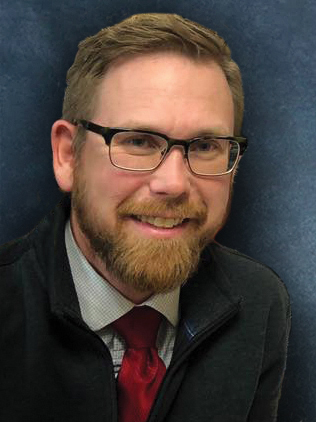
Shortly after the CoSIDA and NACDA conventions last summer, CoSIDA corporate partner Blinder published a blog. Former SID Jared Thompson, now part of the Blinder team, smartly used his time in the Starbucks line in Orlando to talk to athletic directors about their communications staffs. He asked a dozen or so ADs what were the top three areas they felt their communicators should strive to improve over the next year.
The resulting blog — 7 Things Collegiate Athletic Directors Wish Their PR Team Did Better — produced varied reactions. The piece is easy to find through a Google search and if you haven’t read it, you really should. These were the seven overarching points the ADs provided:
- Pitch better stories.
- Be a relationship builder.
- Provide data.
- See the future.
- Communicate internally.
- Give athletes a larger voice (within the brand).
- Go home.
Important context was provided for each point — again, please go read the blog first — but, given that list, you probably had an emotional response to at least one of them (#7 maybe?).
Sure, the answers came from a small sample size of administrators, and anyone worth their salt in the communications business surely knows that all those things are important. Maybe in your head you feel you’re already doing those things well. Now, imagine if you knew your boss was one of those interviewed and said some of these things in reference to you. It might sting. Hopefully those anonymous ADs were also communicating these thoughts to their staffs.
The AD feedback raises perhaps a more important question. Do athletics directors truly understand the depth of what SIDs do? And more so, do ADs understand the challenges of the position and the support needed to achieve department goals?
A couple of tweets from administrators participating in a recent #SCAchat (Small College Athletics) on Twitter illuminate just how to tough an SID’s job is:
Despite many administrators like Abbott of Oklahoma City or Montford of South Carolina Beaufort — and others quoted in this issue — who clearly get it, there are others who simply don’t.
For this magazine, we keep a running list of story ideas. An idea that has been on that list for quite some time has the working title
All they think I do is stats and game notes. “They” being the rest of the athletic department and others across campus. The story would be about the long list of stuff SIDs do that nobody realizes or takes for granted.
An SID’s job, as we know, has never been easy to quickly define. But, if you don’t feel like you have that seat at the table... if you don’t feel like you’re getting the respect you deserve... if you’re feeling overworked and underpaid... if you feel like people in your own building don’t understand what it is you even do... well, you’re probably right and it’s up to you to do something about it. It may be time to reframe your mindset.
Chances are high that you’re telling great stories, have the data and can foresee problems before they happen. But are you sharing it with your AD, coaches and other campus leaders?
The people in your building and on campus should know the value of what you do — and the other way around. Do they?
Read that Blinder blog with an open mind and take a moment to consider whether you’re working only toward your own goals or, more important, toward those of your athletic director and institutional leadership. Make adjustments if necessary.
On the following pages are perspectives from communications professionals who excel at these seven things. Each was suggested to contribute by a peer from the CoSIDA Advocacy Committee. Soak up their thoughts and then go out and continue to make a difference on your campus.
 1. Pitch Better Stories
Chelsey Kraft – University of Oklahoma
Senior Marketing and Communications Writer (Division of Enrollment Management)
A Fred Stabley Sr., national winner for the past two years in the “Story with Video” category, Chelsey has since transitioned from athletics to a position on campus.
Storytelling is a powerful connection tool. A former sports information director for the University of Oklahoma, I now work as the senior marketing and communications writer for OU’s Division of Enrollment Management and also do freelance work for the athletics department and a local magazine. Across all roles, the lessons I have learned about the process of storytelling are the same, including what makes for a good story and how to pitch ideas.
In my experience, the best stories are ones that people can not only connect to but are also unique to a team or other group about which I am writing. How do you find these stories? Building relationships is key because you have to know your team in order to tell its stories. Some ideas would come from the questionnaire we had student-athletes fill out in the preseason, which would then spark follow-up conversations. Others came from what I learned about student-athletes, coaches and staff as I spent time with them in practice and on the road. Research is also valuable, and knowing your team’s history can provide content ideas about past players or anniversaries of significant events.
 Chelsey Kraft with the 2017 NCAA Division I National Championship gymnastics trophy won by the Oklahoma Sooners. Photo courtesy Chelsey Kraft.
While doing research as the SID for OU men’s golf, I came across an old news article about Kyle Lewis, a recruit who passed away in a car accident the summer before his freshman year. I realized he would have been in his senior season at OU, and of all the features I’ve written, I am most proud of the one about Kyle’s impact on the Sooners despite never having played a round for the program.
Sometimes I have presented a story idea with all the details in hand when approaching internal groups or media members. However, some of my best ideas have been borne in brainstorming sessions that then grow as I look into the topic more. Regardless of where you are in the process, know why the story is a valuable one to tell. Don’t convince yourself that an idea isn’t good before you even bounce it off someone else.
At an OU women’s gymnastics practice one day, I overheard someone say how a new leotard was named after the celebrity whose dress inspired the look. That led me to asking questions, and I learned that head coach K.J. Kindler often draws inspiration for leotard designs from red carpets and magazines. Knowing how enthusiastic our fans were on social media about the leos each week, I thought they might like to know more about what goes into the process. I initially doubted if it was an intriguing story, but in the end, I’m glad I listened to my gut and pitched the story because it was one of the most unique ones I have ever written.
There are universal stories that any team has, but finding and telling the ones unique to yours will strengthen your storytelling and make a positive impact on your brand and audience.
 2. Be a relationship builder.
Maurice Williams – Mid-Eastern Athletic Conference
Assistant Commissioner for Media Relations
Maurice’s career includes stops at Shaw University, Hampton University, the University of Tennessee and now the MEAC. The current vice chair of the Diversity & Inclusion Committee, he has been involved in four CoSIDA committees and is active with BCSIDA. He was honored in 2012 with the CoSIDA Rising Star Award and as part of the CoSIDA strategic plan committee in 2016 with a President’s Award.
When I was younger, my grandmother would always tell me to treat people the way I wanted to be treated. That’s how I lived my life for years. In recent years, with experience and understanding, I changed my grandmother’s words slightly: treat people the way THEY want to be treated.
This is the approach I take when it comes to trying to build a new relationship. I try to treat people the way they want to be treated and the rest takes care of itself.
Now, you may be asking yourself, “How do I know how people want to be treated?” The answer to that question is the key to building a lasting relationship. To determine how someone wants to be treated, you have to talk to them and try to get to know them as a person. Not just as an employee-employer relationship, but as a person.
How many times in the last two weeks have you held an interesting conversation with someone you work with? Something other than work-related items. When you talk about things outside of work, you then determine if you have things in common.
I used to think it was easy for me to build relationships with others because I am a self-proclaimed Southern gentleman. Truth be told, it’s most likely because I listen to what people have to say and hold conversations with them.
The key is to be understanding that not everyone wants to develop a relationship with you, and that’s okay. Ultimately, it’s their loss. You are a great person and others would be lucky to know you.
Some administrators welcome the opportunity to get to know others, while some may not be as open to the idea. You have to know the organizational culture of your athletic department and that will give you an idea if your administrator is open to developing a relationship.
When I started at Tennessee, John Currie was the athletic director and he had an open-door policy. It was open to the point that he invited people to stop by his office anytime and talk with him about anything. I thought having that policy made everyone feel welcomed. I took advantage of the opportunity to talk with him and we were able to develop a relationship. Whenever he would see me, he would stop and address me by name, and we would talk — not about work, but about family and life.
This was the standard set by John, and it trickled down to everyone on staff at Tennessee. Because of his actions, I felt welcomed and, in turn, became a better worker.
When you’re dealing with your direct report, you need to have open lines of communication. It makes work much easier when you have those open lines because you have an advocate and someone you can always talk to. Because of the culture that was in place at Tennessee and previously when I was at Hampton, I am still able to talk to the people I developed relationships with. I speak with Tom Satkowiak (Associate AD for Communications, Tennessee) about once a week because of the relationship we developed.
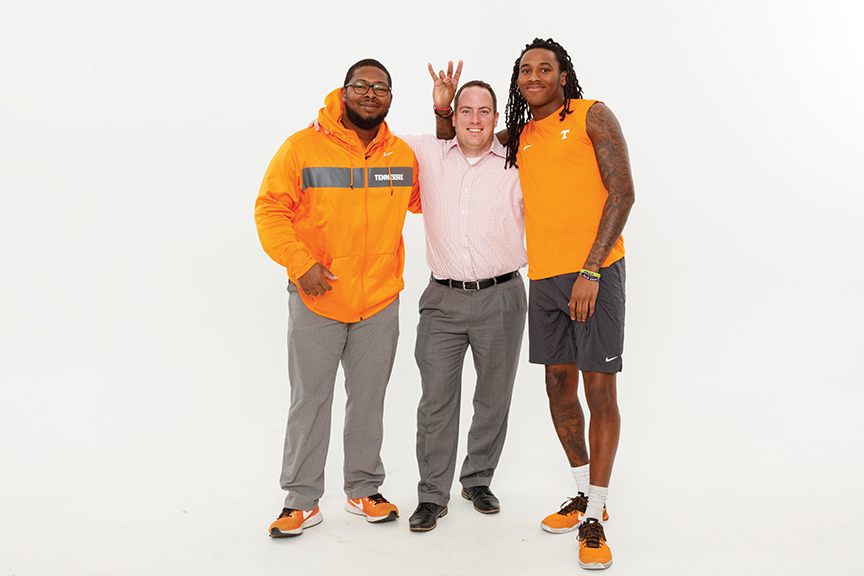 Maurice Williams (left) with Tennessee Director of Football Communications Zach Stipe and wide receiver Marquez Callaway.
In some mediums, words get lost in translation and people get confused if your primary method of communication is through email or text messages. Tone cannot be understood through a written communication, which is why it is important to talk to people.
Don’t let words on a screen potentially give people the wrong impression.
There is no set recipe for building a relationship. The key, in my opinion, to building a relationship is being comfortable with being uncomfortable. You have to get out of your comfort zone and be willing to establish new lines of communication.
That’s it…so how many new people have you spoken with today?
 3. Provide data.
Kylie Murphy – Oregon State University
Director of Ideation
Kylie joined the OSU Ideation Team in August 2017 where she was elevated to Director this past summer. The team serves as an in-house agency for the Beavers, charged with increasing awareness about the Oregon State brand. She got her start as an assistant SID at UAB.
As a former SID, data and numbers don’t translate to my now-creative world...or do they?
At Oregon State, one of the biggest things I’ve learned is the value of analytics, so that is what I task myself to do first thing on Mondays. Why? To show our creative team’s value.
To explain why we post at certain times. To show what content does well, and what doesn’t. To put our resources and efforts in the correct places and positions. All in all, analytics help us be more effective because everyone always wants to know the “why.”
All of this Monday information goes into a document that we then send out to our head of external, creative team, recruiting personnel and the chief of staff at football. During our content planning meetings, we go over it.
 Kylie Murphy playing with a new toy at Oregon State’s Reser Stadium.
We lean on the numbers to develop our social strategy. Megan Julian, social media director for the Los Angeles Chargers tweeted a while back that engagement > pretty. If you were to ask any social-minded person, there are social best practices — but if you looked at our social, we probably break five of those rules a day. Why? Because it’s what our audience likes. OUR audience.
We compare gameday to gameday, graphic to graphic, video to video — there are endless ways and variables to try and nail down the perfect post with the perfect caption and so on. Since moving from a general athletics position to a football-specific role, my entire mindset has shifted. Our target audience is no longer fans, alumni, etc. Instead, our account has transformed into our recruiting account.
How do we know who we’re reaching? We analyze. We see what content recruits we target are engaging with, which players we should promote more to reach our targeted audience. Everything we do has a purpose. Each retweet, post and like is made with the thought that this is something we want a potential student-athlete to see.
All of this comes back to one thing: what is our goal? Each team, platform and University will have different goals and purposes — and what is the most objective way to determine if you’re meeting those goals? Data. Numbers. Analytics.
 4. See the future.
Kelly Bird – Linfield College
Sports Information Director
Now in his fourth decade as Linfield’s SID, Kelly is the standard for excellence in the Division III Northwest Conference. From promoting national champions to staying ahead of the curve on marketing strategies and implementing new technology, his vision has led to many awards.
“That’s the way we’ve always done it.”
It’s a tired line that I simply don’t agree with. As sports communicators, we must always be ready to embrace change, adopt new technologies and adjust best practices in order to tell our stories more vividly.
As one whose career began in the pencil-and-paper age of sports information, I’ve been witness to the steady progression of change that rising technology has brought us.
Who could have imagined in 1990 that the introduction of the internet three years later would so profoundly change our profession? To the point where immediate access to sports information is demanded and ‘less is more’ messaging grew to become the preferred form of communication.
How do we anticipate the future? It’s a hard question. You must keep an open mind, listen and watch what the younger generation is saying and doing, then be ready to try new approaches to performing some of your routine functions.
Be willing to take some risk, creatively speaking, and expect that your leap of faith will pay big rewards. Most of the time, it will. Sometimes it won’t. But if you stay stuck in the “that’s the way I’ve always done it” mindset, you and your institution are doomed to a reputation of being boring and ordinary.
 Linfield College SID Kelly Bird says listening and learning from younger generations about trends in pop culture and technology is a key tactic to remaining relevant in today’s ever-changing communications landscape.
Seeking out more imaginative ways to communicate your school’s message can mean the difference between thriving and merely surviving. Which are you?
Instead of just recycling the template of the game program you’ve used the last six seasons, why not start that next edition completely from scratch?
Or perhaps invest in a new piece of equipment or software that you know will take substantial time to learn but, for example, could reap renewed interest and greater exposure for your coach’s video interviews.
When your school takes the plunge and buys a new video board, instead of shrugging your shoulders and asking who is going to provide programming for it, run to the battle and embrace your newest communications tool.
A day before the 2007 CoSIDA Convention began, I stood in line four hours at the Apple Store in downtown San Diego to purchase the very first iPhone. I sensed the iPhone was going to be the next big thing and couldn’t wait to own a device that seemed as though it were created with SIDs in mind.
If you remain stuck doing the same practices year after year, or are unwilling to learn new tools and tricks, soon you’ll be lapped by your competition. At that point, your school may start looking for a nimbler, shinier version of you.
I’m not saying change things just for change’s sake. Instead, be willing to strategically try new things, experiment with new tools and styles, and then unleash your fresh ideas on the world.
The same skills the sports communications professionals were known for in the 1990s — relationship building, clear writing and the ability to disseminate large amounts of information — are still valued commodities today and into the future. Technology may be changing but the essential skills needed in our profession likely never will.
Looking back, had the sports communications business not evolved so wildly over the last three decades, I probably would have moved on to a new line of work long ago. I’ve come to realize the constant challenge of pushing forward to the next horizon is what keeps me charged up and excited about what’s to come.
 5. Communicate internally.
Kelli Elmore – Kansas Collegiate Athletic Conference
Assistant Commissioner
As the event manager and organizer for many championships, awards programs and other activities, Kelli has earned her stripes at both the institution and conference levels.
When I was approached to write my thoughts on effective internal communication, I thought I knew exactly what I wanted to say. However, the more I thought about it, the more challenging it became. I’ve worked at the institutional level, which is completely different than working at the conference level, so I decided to split them up in order to convey the importance of both.
Conference Office
Working in a conference office presents a lot of opportunities and challenges to communicating internally. With 13 member schools, I have to make sure each coach, SID, and AD understand what is going on within each respective season. Creating deadlines, press releases, championship event info, etc., across 26 sports seems daunting, but with the right communication, it goes off without a hitch.
As we inch closer to a championship event, getting all the details in order and knowing who is doing what can make or break the event. I make sure to speak with my commissioner, the sport chair, SIDs, and coaches who make the tournament so everyone knows what to expect. We cannot just show up on the day of the event and expect everyone to know where they need to be and the timeline of the day.
When it comes to news around the conference, I tell all 13 SIDs in our conference to let me know of anything important happening on their campus. I always want to promote relevant hires, milestones, etc., and there is nothing more frustrating than finding out a school hired a new basketball coach days after the fact. I can’t post it on my website and distribute it to the local media on my end if I don’t know about it.
 Kelli Elmore (front, center) with her fellow KCAC SIDs.
Institutional Level
We’re all on social media every day; it’s a big part of how we receive information and get information out. However, you can’t just put out a tweet or put a story on your website and expect everyone is going to see it. If you want your story to be told inside and outside of your institution, you have to do your due diligence and send it out to the media, let your AD know what’s going on, and send it to your conference office so they can send it out to their local media, etc.
As a sports information director at the institutional level, it’s also important to have a good working relationship with coaches. Not all coaches are alike, so being on the same page as each coach and knowing their vision for the program will only make your job easier.
The cause of most headaches at any level is leadership not knowing what is going on.
Open communication, in addition to weekly or monthly meetings will help keep everyone up to date and will make your job easier in the long run.
 6. Give athletes a larger voice (within the brand).
Kenisha Rhone – Belmont University
Director of Digital Media & Social Strategy
When it comes to understanding the importance of humanity, no one does it better than Kenisha. Browse through her bio and it’s easy to see why she was named CoSIDA’s 2019 Bob Kenworthy Community Service Award recipient. At Belmont, she’s been giving voice to student-athletes and the entire student body across campus for 16 years.
If we are helping to shape the next generation of this country’s best and brightest through our collegiate athletics programs, we do a great disservice to our student-athletes by muzzling, whether by thought, policy or refusing to acknowledge, the one thing that differentiates them as people — their voice.
In our profession, the voice is a highly curated thing — it can rise and fall on wins, losses and postseason appearances or lack thereof. The way we craft those stories can build our brands and fan bases while strengthening their voices as ambassadors of the universities they represent.
The voice of our student-athletes can help strengthen our brands as a department while helping them see the value in developing their own voice long past their playing days. Wins, losses and statistics can easily be found online but learning the story behind them is what helps turn casual fans into season ticket holders. We can teach fans to root not just for our teams but for the student-athletes behind the uniforms through storytelling.
Will our student-athletes give the perfect interview, chocked full of great sound bites after every single competition, win or lose? Absolutely not. Can we help build confidence in our student-athletes to make wise decisions about how to answer those positive and negative questions that may come their way? Of course we can.
Whether that is a preseason mock interview, sending video clips of great interviews from current athletes, or taking the time to chat with them during a team meal or on the next road trip, we can help polish the diamonds among us. Sometimes there’s a little more coal wrapped around one but if we exert just a little effort, we may develop a student-athlete in an area that will not only pay dividends on the field of play but in the classroom and beyond.
 Kenisha Rhone with former Belmont standout and current professional men’s basketball player Ian Clark.
Nurturing the student-athlete voice isn’t a one person job. We can reiterate and reinforce what they hear from coaches and in team meetings as preparation for an opportunity to speak to the media even in tough situations instead of pushing inauthentic narratives.
Our industry has morphed us into the ultimate storytellers for our institutions. Gone are the days where we have to hope an event is featured in the local newspaper in a weekend recap. We are our own content creators with the opportunity to tell our stories across social media platforms, plus our own athletics websites. This gives us that many MORE opportunities to help our student-athletes grow as brand ambassadors in the spaces (social media, anyone?) they feel the most comfortable telling the story behind the score. We can help our coaches and administrators see the value in the student-athlete voice as it resonates with and creates fans from all walks of life while in turn helping our student-athletes see they are valued far beyond their ability to produce in their respective sports. It’s not more work, its working smarter with the resource in plenty around us – our student-athletes.
 7. Go home.
Dave Walters – Guilford College
Sports Information Director
Dave is now in his 24th year overseeing the publicity efforts of the Quakers’ 22-sport NCAA Division III program. On top of that, he serves on CoSIDA committees and volunteers in his community of Greensboro, North Carolina, where he resides with his wife Christine.
The AD thinks we need to go home, eh?
So who’s going to track down the officials, disperse the off-campus results that just came in (four hours late), pack up the press box, carry equipment back to the office, craft the day’s six recaps, send them to the media, post them to the website, and to social media?
And then there’s dinner, which really should be something other than a third piece of pizza served in the press box earlier that day.
Did you roll your eyes when you saw the ‘Go Home’ item? Were you a little conflicted? Who hasn’t pulled a near all-nighter to meet a deadline? Who hasn’t suffered the consequences for days afterwards? Maybe you’re regularly out of the office at 5 PM, but working at home well past its other occupants’ bedtimes.
Long days, long weeks, and long games have long been pitfalls of our fine profession. I’ve been in the game over 25 years now and for some reason think next year’s going to be different. Improved technology, new statistical platforms, quality student helpers, a new assistant, fewer (or smaller) publications annually give cause for optimism, yet I can still put in a 12-hour day or a 60-70 hour week.
So how do we go home when there’s always more to do, always another game and always another fire to extinguish?
As the clock nears midnight on this article’s deadline, I surely don’t have all of the answers. However, I’ve learned some things that may get you out of the office, bring life, and ultimately make you a better SID.
Treat your time like gold.
We’re allotted the same hours in a day and days in a week, but we’re not given the same number of days and years. Appreciate your time and spend it wisely. Yes, you have to be in the office, at the contests, and on the road. It adds up, but it can’t be ALL of your time. I’ve heard it said a person’s checkbook illustrates their priorities. I think calendars do the same. Work-life balance is a real struggle, but you’re the only one who can fight for your life.
Give back.
To those stretched thin and overwhelmed, this looks like another heavy bucket. But hear me out. Your skills and abilities are good for more than just statistics, writing, and graphic design where you work. Poke your head off campus and notice the many charitable, civic, and faith-based organizations helping others. There’s a spot for you there. Engaging with these groups gets you out of your bubble (and your office!) and exposes you to others’ needs. Your own challenges will look different and your community is strengthened when you give back.
Give back to the profession.
This may seem somewhat self-serving, but I can honestly say my CoSIDA participation inspires and encourages me. Five years of executive board service added conference calls to an already full slate and made for VERY long CoSIDA Conventions. It also connected me with peers in a new way as we addressed the organization’s growth and function. Likewise, my service on the CoSIDA U and Academic All-America® committees generate life-giving opportunities. I didn’t need to join a second committee a few years back, but as I grew more familiar with the Academic All-America® program, I wanted to promote the best and brightest in college sports and scholarship.
While the extra responsibilities may lead to more office time, attending CoSIDA Conventions, CoSIDA After Hours Events, and working special postseason competitions like NCAA Championships get you off campus where you can represent you institution and fellowship with peers.
Take care of yourself.
It feels like one more thing to do. It may cost extra time and/or money, but investing in healthy self-care can do wonders. Exercise, a better diet, personal enrichment, or a hobby will cost some of your precious time and can pull you off your laptop and smartphone (and out of the office!), which is not a bad thing. Self-care not only helps you, but also enables you to better serve and lead those around you.
So go home! The work will be there tomorrow. You’ll be better equipped to tackle it when you make time for yourself and those around you.
 Dave Walters with Guilford Athletics Director Sue Bower.
Want to add something to this topic? Add your thoughts on the
CoSIDA Connect Open Member Forum.